At the Global Tourism Forum Angola Investment Summit 2026 in Luanda, V-Marine founder Wael Joujou made the case that the continent’s next major tourism opportunity may not be found on land — but on the water.
Luanda, Angola — June 2026
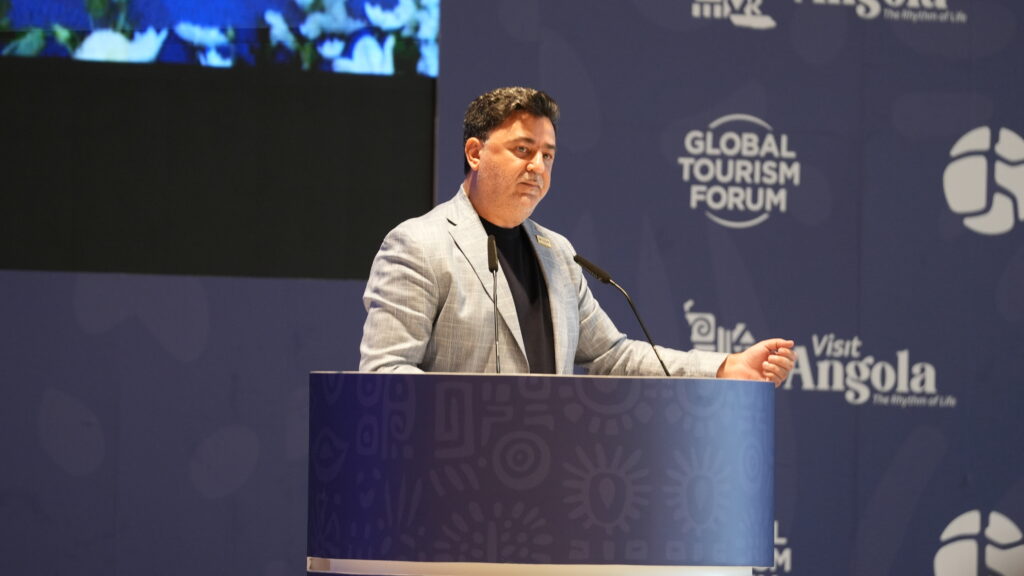
For over a century, the world’s tourism destinations have competed using the same tools: hotels, resorts, convention centres, beach clubs. Everyone has them. Dubai, Singapore, Barcelona, Miami, Cape Town — the toolkit is identical, and so, increasingly, is the experience. Speaking at the Global Tourism Forum Angola Investment Summit in Luanda, V-Marine founder and chief executive Wael Joujou argued that the next frontier of tourism lies somewhere the industry has largely ignored: on the water itself.
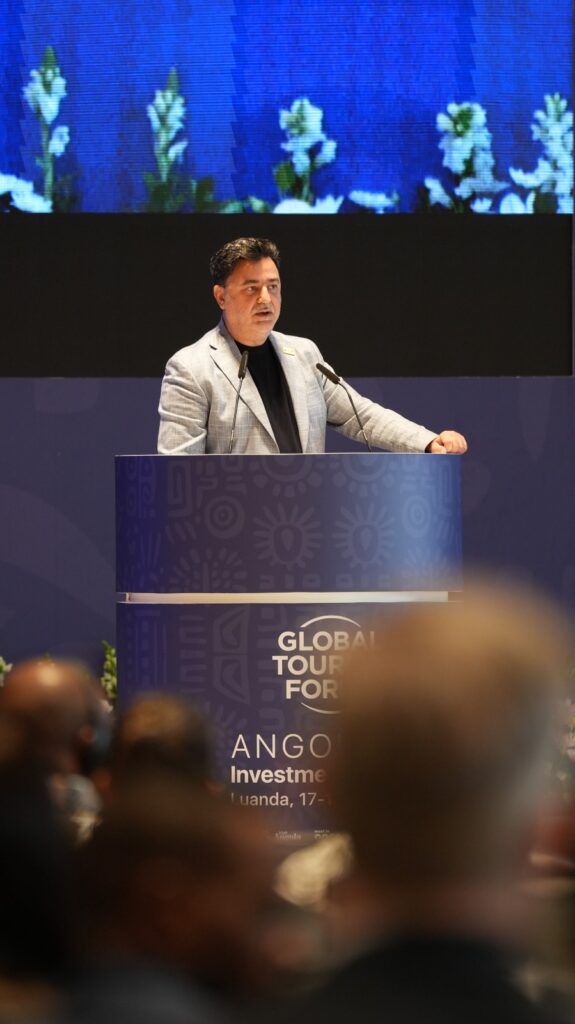
His keynote, “Yachts & Floating Destinations: The Missing Tourism Asset,” opened with a simple observation. Ask almost any traveller whether they would like to spend a night on a yacht, and nearly all say yes. Ask how many actually have, and the figure collapses to a tiny fraction. “That isn’t a demand problem,” Joujou told delegates. “It’s a format problem.” Nautical tourism, he argued, has been left niche, complicated, and difficult to book — when it could be as simple as choosing a hotel, a villa, or a boat on any booking platform.
From “green oil” to “blue oil”
The argument found a particularly receptive audience in Angola, a country actively working to diversify its economy beyond oil. Angola’s Minister of Tourism, H.E. Márcio de Jesus Lopes Daniel, has described tourism as the nation’s “green oil” — a sustainable engine for jobs and growth. Joujou proposed extending that idea by one colour. Angola, he suggested, should also look to its “blue oil”: the ocean, the coastline, and the water-based experiences that remain almost entirely untapped.
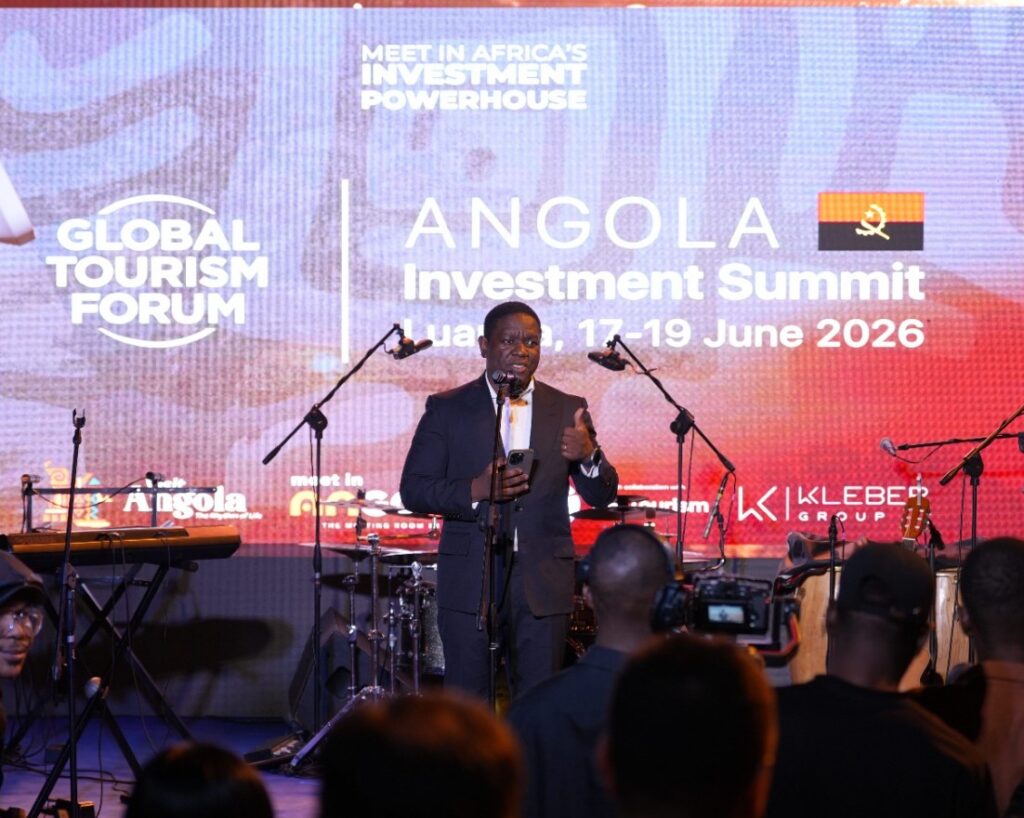
It was a framing designed to honour the Minister’s vision rather than compete with it, and it became the phrase most associated with the talk. With more than 70 percent of the planet covered by water, Joujou noted, less than one percent of it has ever been shaped into a tourism experience.
https://www.linkedin.com/posts/itbberlin2026-ugcPost-7434978391734353920-tIP-
The vertical paradox
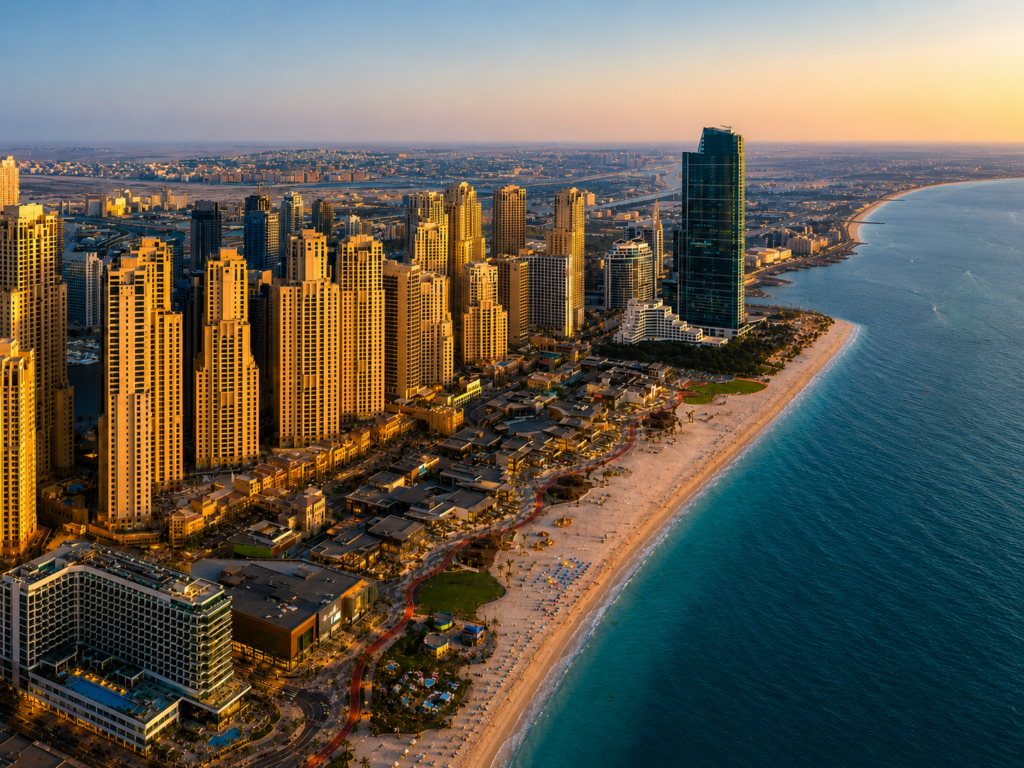
Central to the keynote was a concept Joujou called the “vertical paradox.” Along desirable coastlines, he explained, a narrow strip of waterfront land becomes extraordinarily valuable — while the vast expanse of water in front of it, the very thing that creates that value, remains unused. “The water creates all the value,” he said, “yet it has a high value and no price.” The result is a wall of development crowding the shore, and an ocean treated as scenery rather than opportunity.
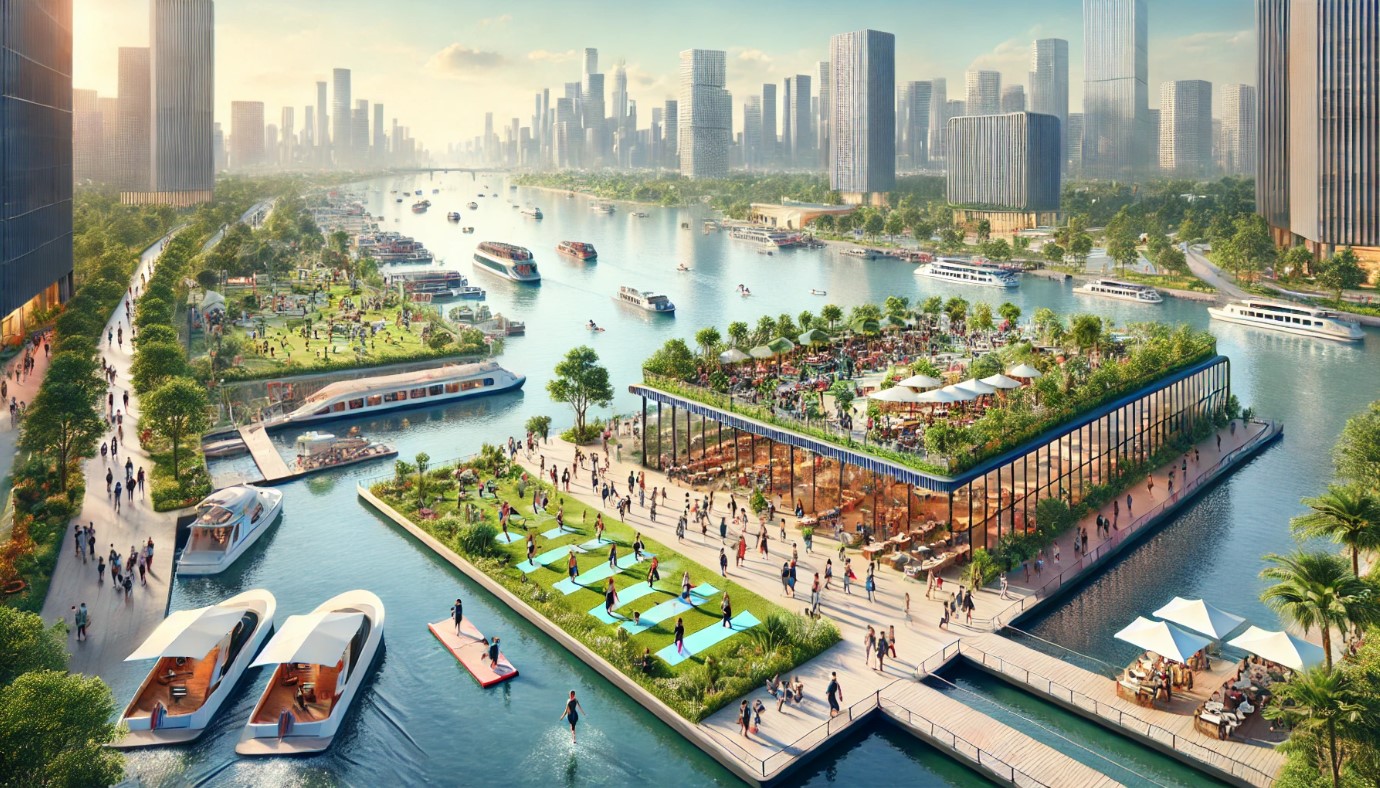
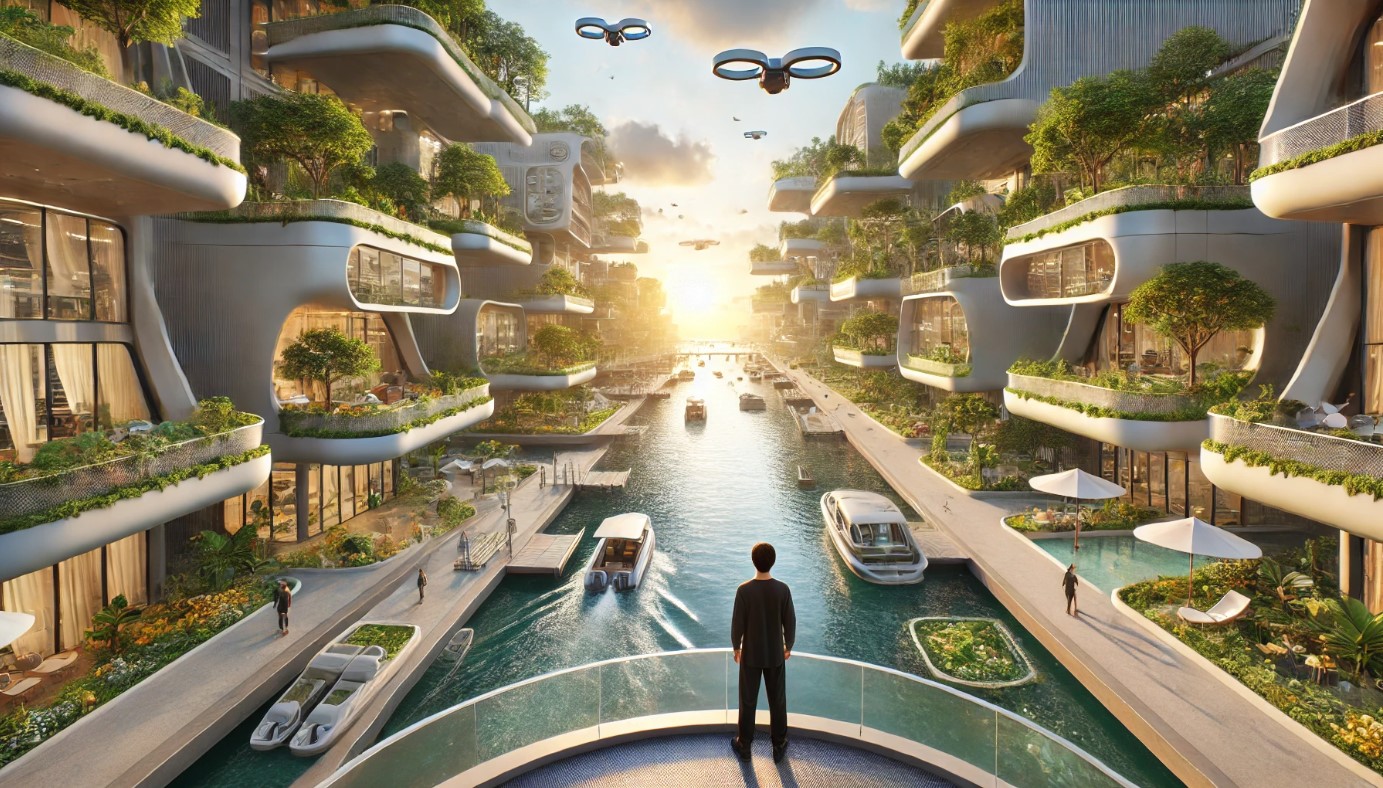
The alternative, he argued, is to move beyond the waterfront and onto the water — through floating hotels, overwater villas, yacht stays, floating beach clubs, and marina destinations that expand a country’s hospitality capacity without consuming its coastline.
Lessons from the Maldives, Venice and Monaco
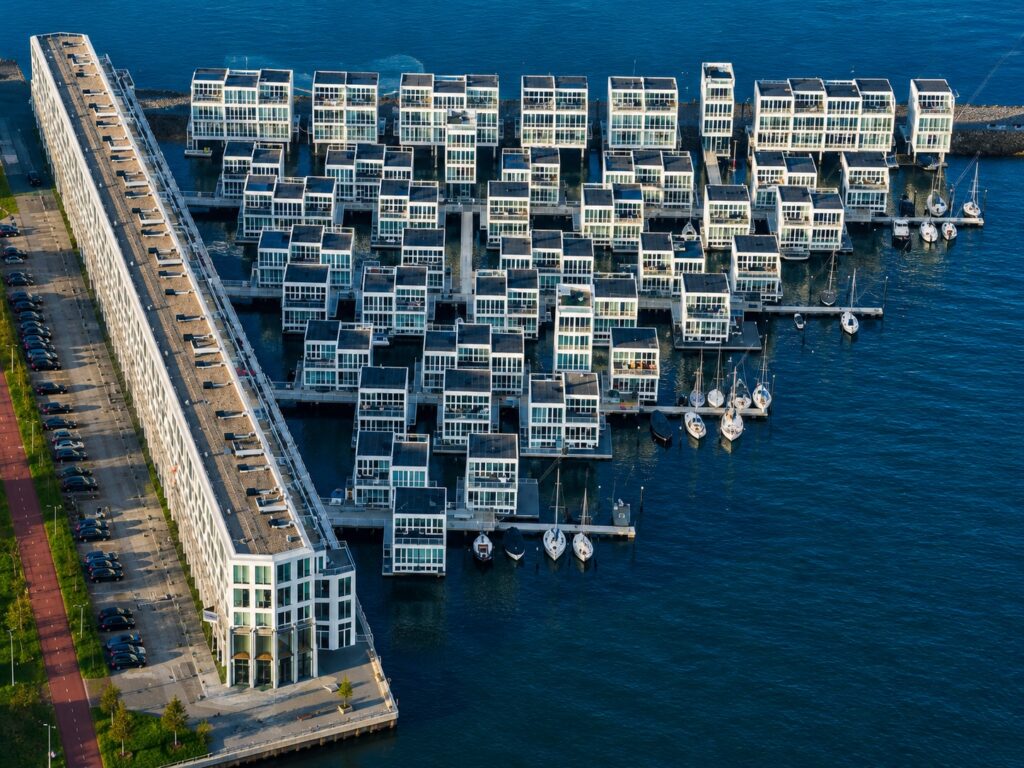
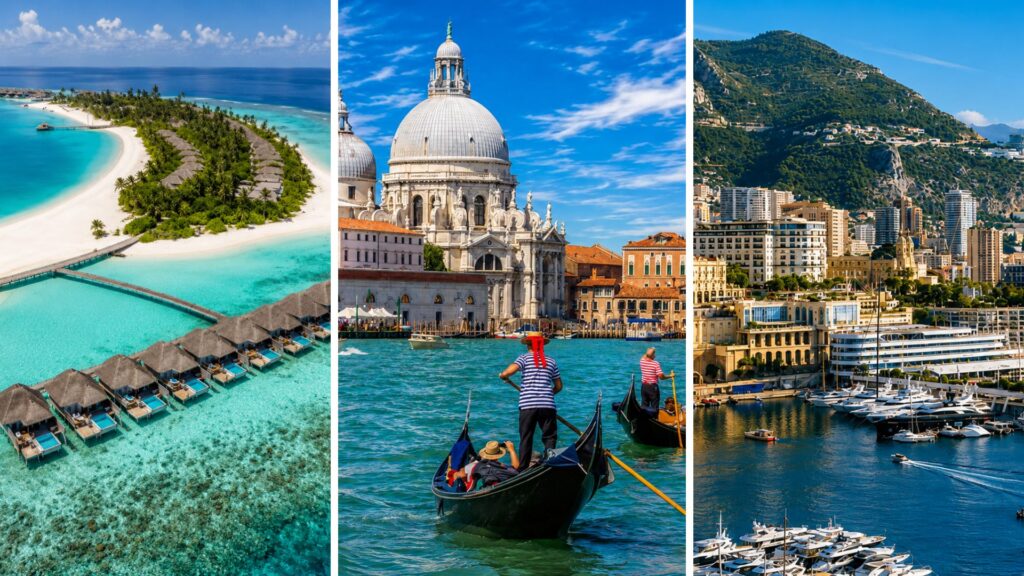
Joujou pointed to destinations that turned geographic challenges into signature assets. The Maldives, he noted, faced a genuinely difficult geography — a thousand scattered islands, little land — yet transformed that constraint into the overwater villa, one of the most recognisable tourism products in the world. Venice lived with its flooding rather than paving it away, and the water became its identity. Amsterdam used floating properties to solve a shortage of living space, and they became an attraction in their own right.
Monaco offered perhaps the sharpest lesson. With one of the shortest coastlines in the world — roughly four kilometres — it achieved global reach through yachts, marinas, and nautical culture. Joujou posed the question directly: did Monaco attract the wealthy because it was already rich, or did building a world-class marina ecosystem make it so? His answer favoured the second. The luxury segment, he argued, is not a decorative add-on but the anchor that unlocks broader tourism demand.
Connectivity and the floating future
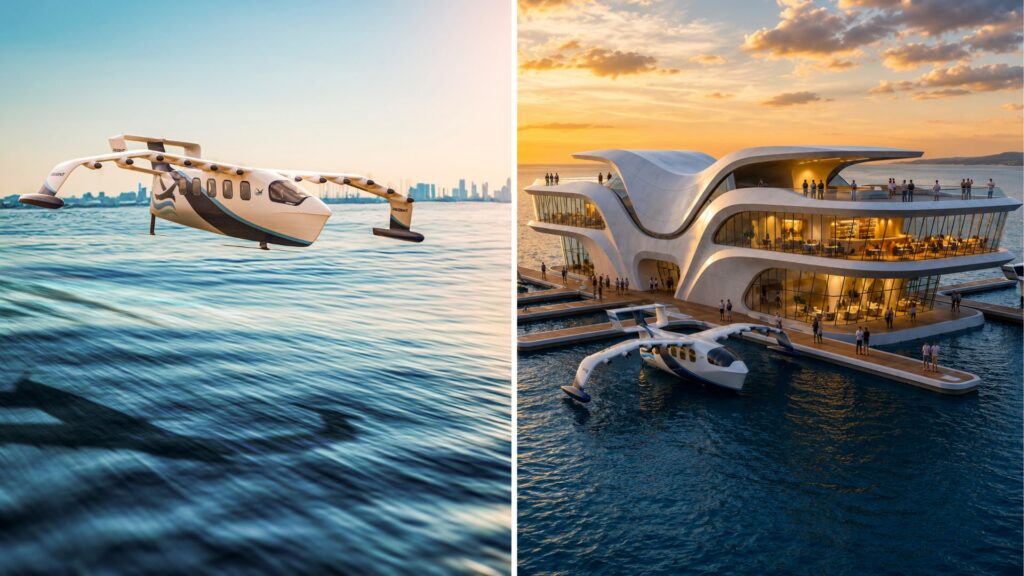
The keynote also looked ahead to the technology that could reshape coastal tourism: battery-powered seaglider vessels capable of travelling long distances quickly across water. By solving the connectivity problem that has long held back islands and remote coastlines, such craft could make previously inaccessible destinations viable — turning travel between coastal sites into something closer to a taxi ride. V-Marine, Joujou noted, is developing floating terminals as part of this emerging infrastructure, anticipating that these technologies will embed over the coming five years.
An invitation, not a pitch
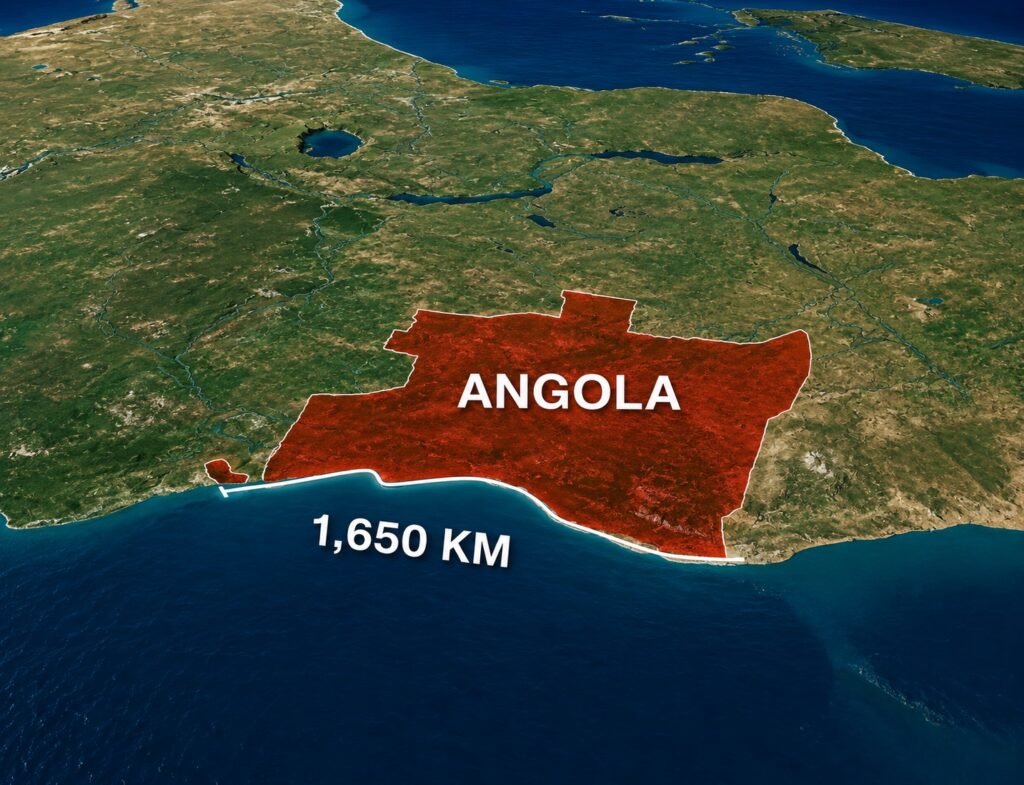
Joujou was careful to frame the talk as a beginning rather than a proposal. Angola’s coastline stretches more than 1,650 kilometres and encompasses four distinct coastal environments — urban, beach, rocky, and the rare spectacle of desert meeting the sea — a diversity, he said, he has not seen matched anywhere in the world.
He closed with the line that became the keynote’s signature: “Whenever you see blue water, don’t see the end of the land. See the start of a new tourism activity.”
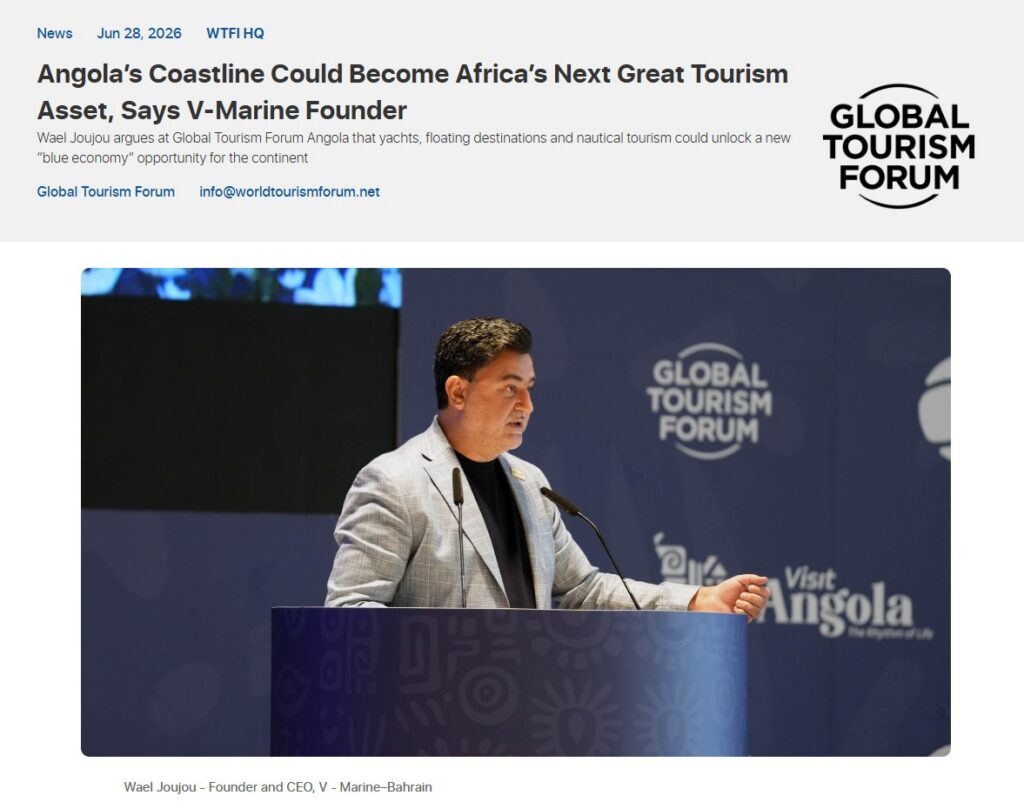
The World Tourism Forum Institute featured the keynote in its official summit coverage under the headline “Angola’s Coastline Could Become Africa’s Next Great Tourism Asset.” For Angola — and for a continent with more than 30,000 kilometres of coastline — it may prove one of the most valuable ideas to surface in Luanda.
https://www.linkedin.com/feed/update/urn:li:activity:7479411288926834689/