Insight
Floating parks and clubs
How cities are turning underused waterways into parks, pools and clubs, with examples from Copenhagen and Berlin.
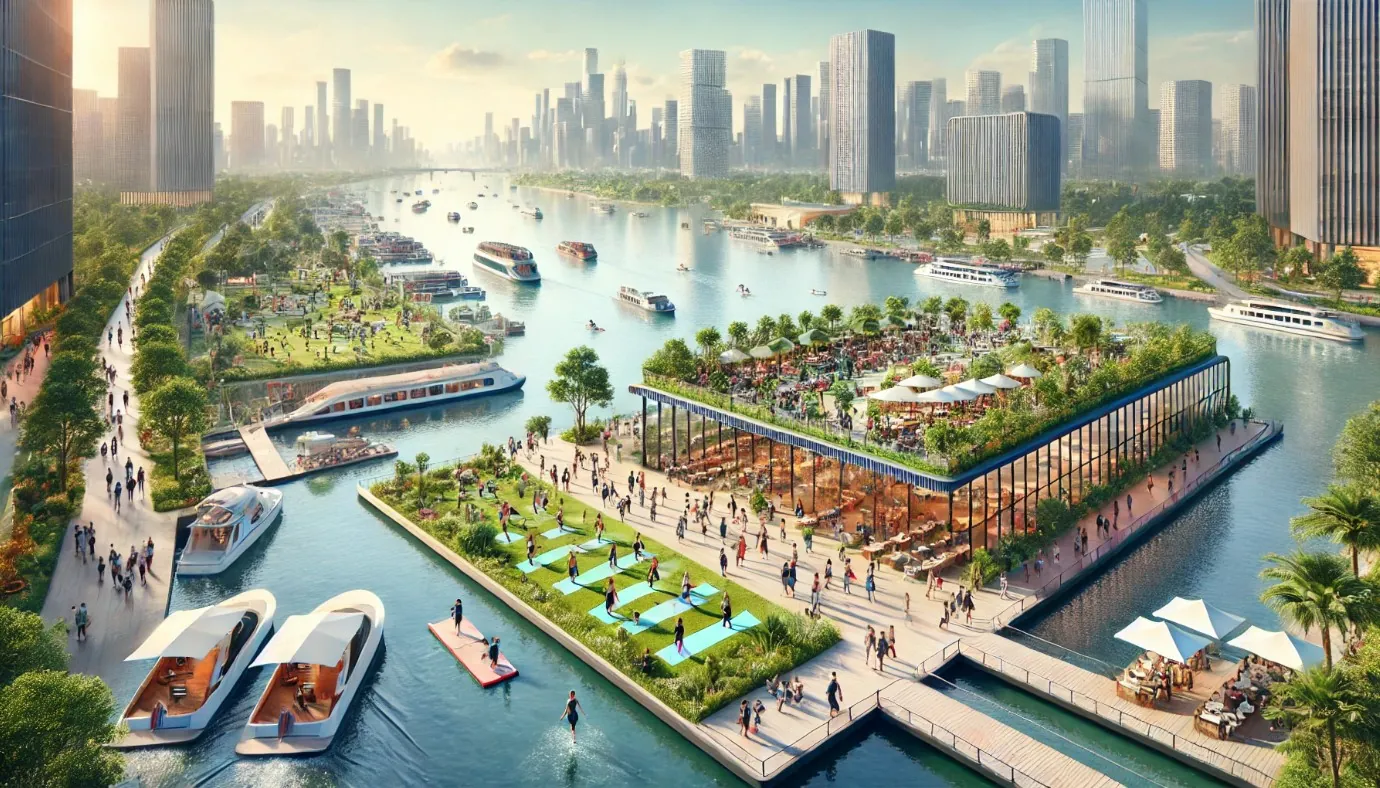
Many cities have more water than spare land. Floating parks and clubs put that water to use, adding room for recreation and social life in crowded districts without taking up ground, and they can do it with care for the environment around them.
Using the waterfront
Cities are starting to see their underused rivers and harbours as assets rather than obstacles. A floating park or club gives people somewhere to gather and step away from the streets, without the land a new park would need.
Copenhagen’s Harbour Baths
Copenhagen has long led the way in using its urban water. The Harbour Baths, designed by well-known architects, have made the waterfront one of the city’s busiest meeting places. People come to swim, but the baths also host events and community gatherings.
Badeschiff, Berlin
Berlin’s Badeschiff, or “bathing ship”, began as an art project and became a permanent summer attraction. The floating pool on the River Spree gives swimmers wide views of the skyline, and the floating beach beside it, with sand and lounge chairs, turns the spot into a retreat in the middle of the city.
Built with care for the water
Projects like these favour recycled materials and low-impact construction, and are designed to disturb the water around them as little as possible. They show that modern engineering and ecological care can work together.
Floating clubs
Floating clubs carry the idea into the evening, combining dining, entertainment and views over the water. It is close to the work V-Marine does on floating lounges and venues, where the setting is as much a part of the visit as the menu.
Space for the community
Floating parks and clubs are part of a wider effort to improve city life. Where land is scarce, they offer open, healthy places to spend time and help neighbours meet. As cities keep growing, spaces like these are likely to play a larger part in keeping them liveable and resilient.