Insight
Sea-based tourism and the wonders of floating resorts
Floating resorts offer a new kind of stay on the sea. What they give guests, and how they can support more sustainable tourism.
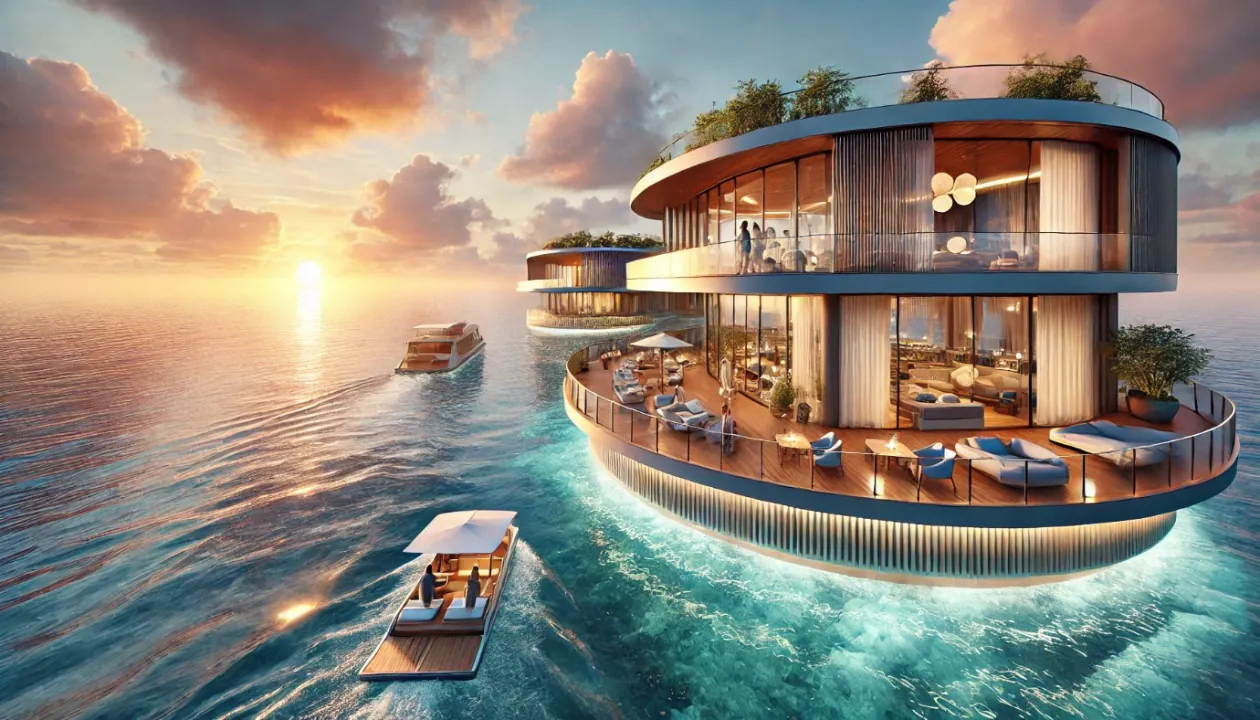
The ocean has long drawn travellers in search of adventure or calm. In recent years that pull has given rise to a distinct corner of tourism: the floating resort. These structures offer comfortable stays in close contact with the sea, and many are designed to tread lightly on the places they occupy.
What a floating resort is
Put simply, a floating resort is a hotel built on water. Guests stay on the sea itself, with open water all around. The idea runs from intimate floating hotels to large complexes and, in the most ambitious plans, entire floating cities. The aim is the full comfort of a high-end hotel: spacious suites, fine dining, a spa and plenty to do on the water.
The experience
Much of the draw lies in what guests can see and do:
- Marine life: many floating resorts sit in clear, unspoilt waters, where snorkelling, diving and underwater observatories bring guests close to life beneath the surface.
- Water sports: kayaking, paddleboarding, jet skiing and deep-sea fishing start a few steps from the room.
- Views: open water on every side means sunrise and sunset over an unbroken horizon, with the sound of the waves always in the background.
- A lighter footprint: many are designed with solar power, desalination and waste recycling built in.
A case for sustainable tourism
Floating resorts can also help tourism grow with less harm to the places it depends on:
- Less land disturbed: building on water reduces the need for large-scale development ashore, which matters most in ecologically sensitive areas.
- Renewable energy: solar panels and wind turbines cut a resort’s reliance on fossil fuels.
- Fresh water: desalination turns seawater into fresh water without drawing on local supplies.
- Waste: treatment and recycling on site keep waste out of the surrounding sea.
- Conservation: programmes on marine life and its protection help guests understand what is at stake and act on it.
Examples around the world
- The Manta Resort, Zanzibar: best known for its underwater room, where guests sleep below sea level surrounded by marine life. The resort uses solar power and water recycling.
- Punta Caracol Acqua Lodge, Panama: overwater bungalows built from sustainable materials, powered by the sun, with a focus on protecting the coral reefs around them.
- Arctic Bath, Sweden: a floating spa hotel on the Lule River, built from local, sustainable materials and run on renewable energy.
What comes next
As more travellers look for trips that are both distinctive and responsible, floating resorts are likely to become more common. Advances in green technology and construction on water will only add to their appeal.
V-Marine designs and builds floating structures for this kind of hospitality, from resorts and spas to restaurants and lounges, with comfort and sustainability in mind. The aim is for guests to enjoy the sea while leaving it in good health for those who follow.