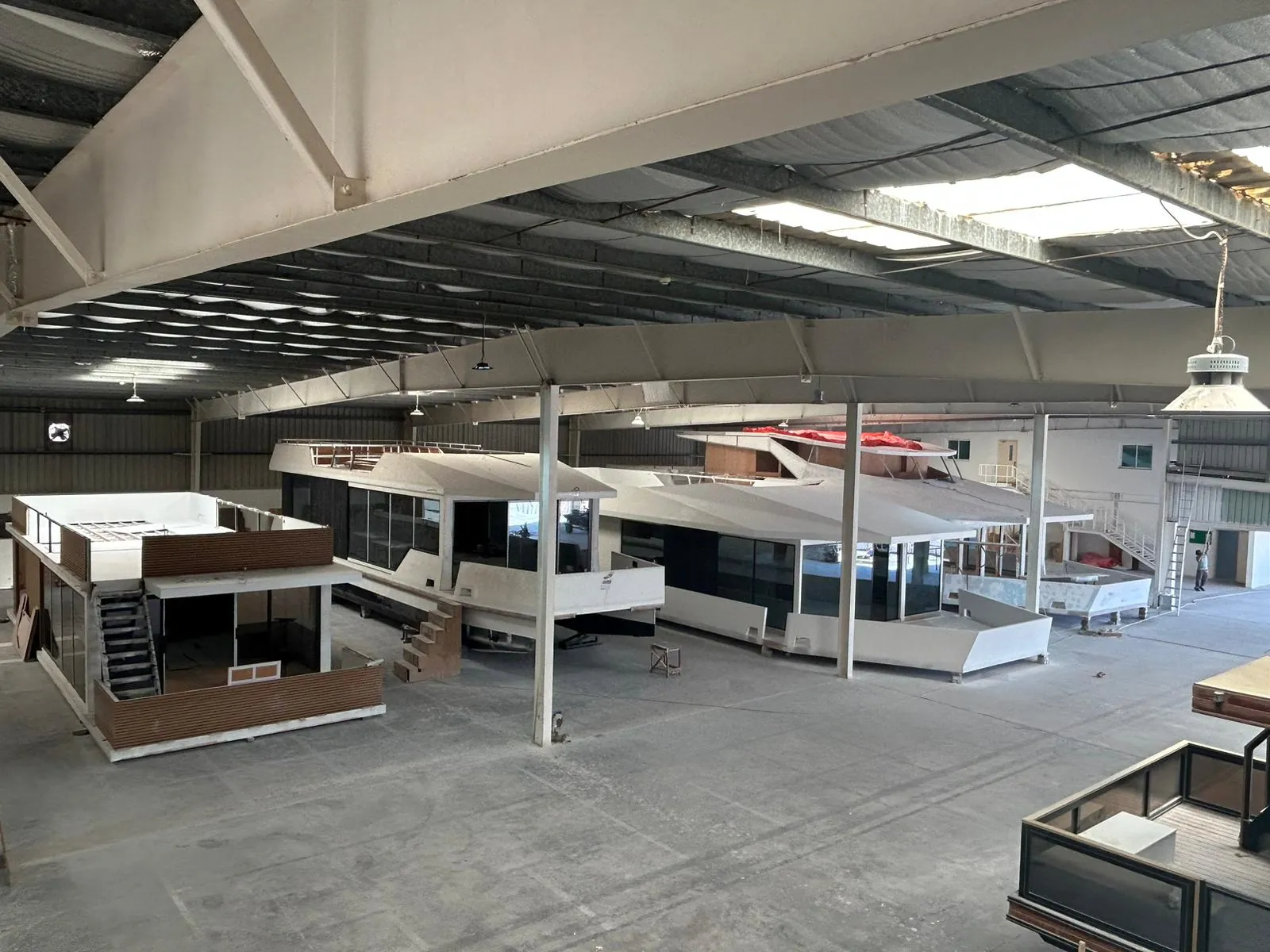
Insight
A new wave of floating restaurants and bars
Floating restaurants and bars put the table on the water. Where the idea came from, how good ones are designed and where it is heading.
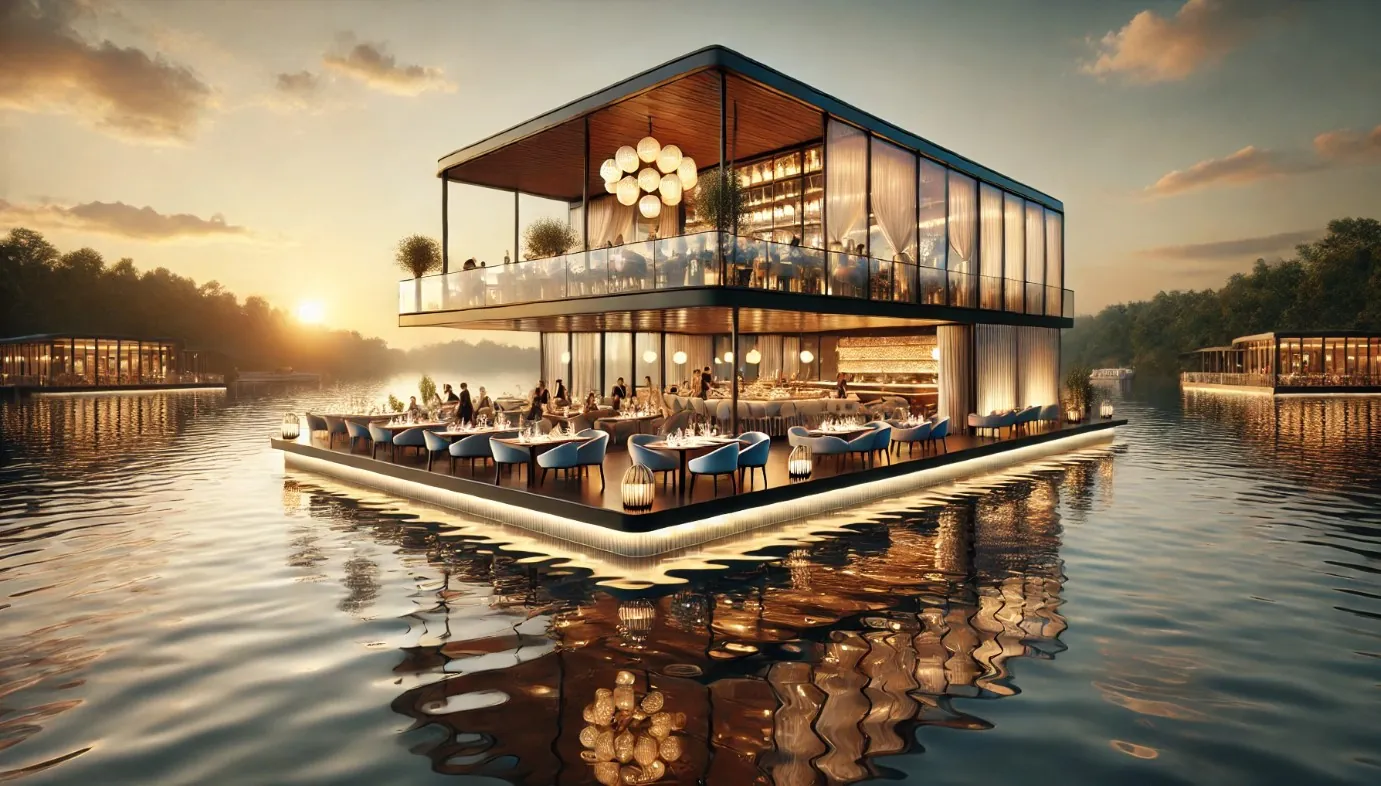
Restaurateurs are always looking for a setting their guests have not seen before, and few settings do that as well as water. Floating restaurants and bars pair good food with open views and the quiet movement of the sea. As more of them open, they are changing what people expect from an evening out.
An old idea on the water
Dining afloat goes back centuries. In Japan, yakatabune, traditional wooden pleasure boats, have long served meals to guests cruising rivers and calm coastal waters, with the scenery as much a part of the occasion as the food. In Paris and Venice, riverboats have been used for dining and entertainment since at least the 19th century. The bateaux mouches of Paris serve French cooking on their sightseeing cruises, and in Venice a meal on a gondola or small boat has been a romantic ritual for generations.
Why floating venues are growing
Today’s venues are far more varied and refined, from small converted boats laid out as intimate dining rooms to large yachts serving full tasting menus. Their pull is the setting itself: the gentle movement underfoot, water against the hull, a clear view in every direction. For people who live in cities they are a real change of scene, which is why so many choose them for special occasions.
Designing for the water
A good floating restaurant is not a dining room placed on a hull. The layout has to make the most of limited space and give every table an open view of the water. Interiors usually follow either a nautical theme or a pared-back modern style that leaves the view to do the work.
Kitchens and bars have their own demands. Appliances must be secured, and service has to run smoothly even when the vessel moves. Materials need to be durable and water-resistant, and to hold up in humid, salty air.
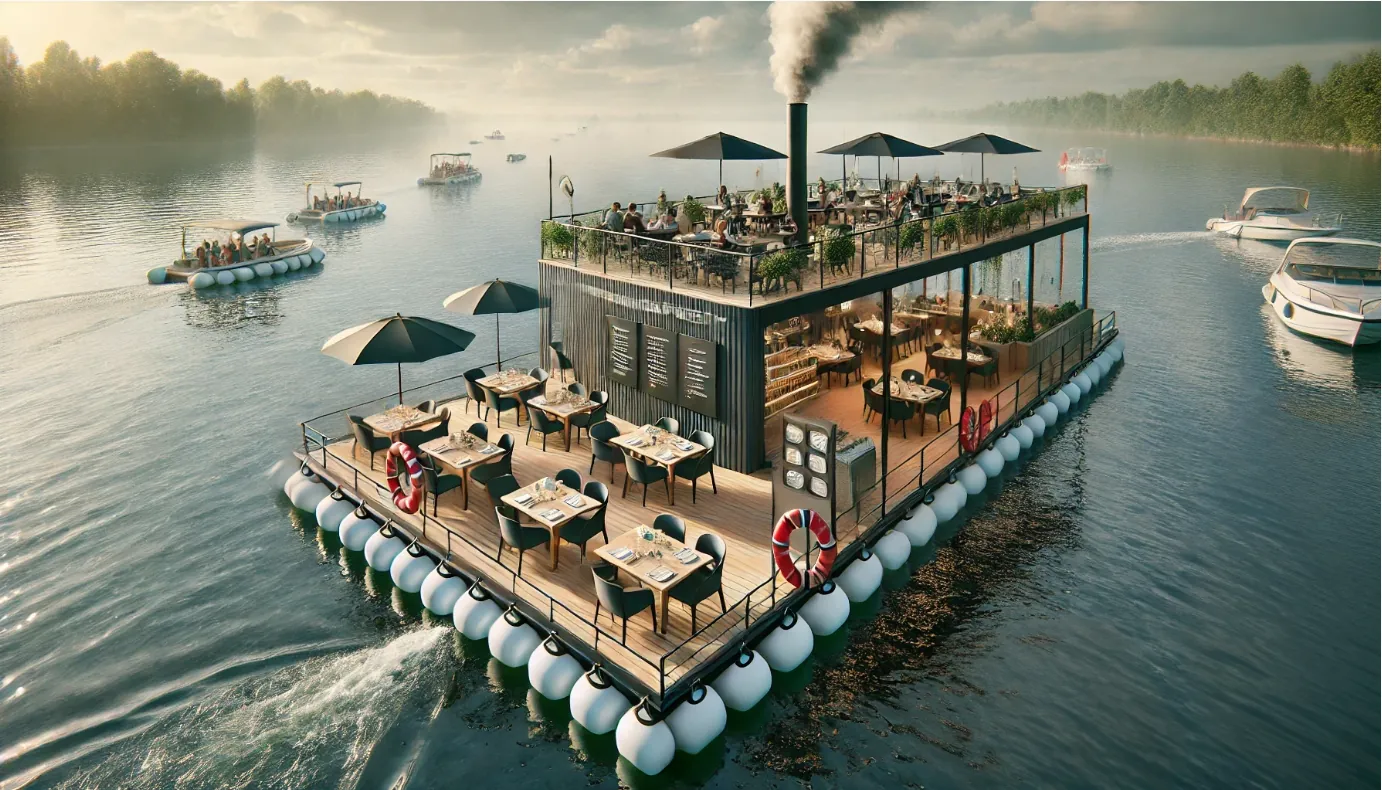
Sustainability now shapes the brief too. Many operators run on solar power, recycle water and buy local, sustainable ingredients. It lowers their footprint, and it matters to a growing number of guests when they choose where to eat.
Menus with a sense of place
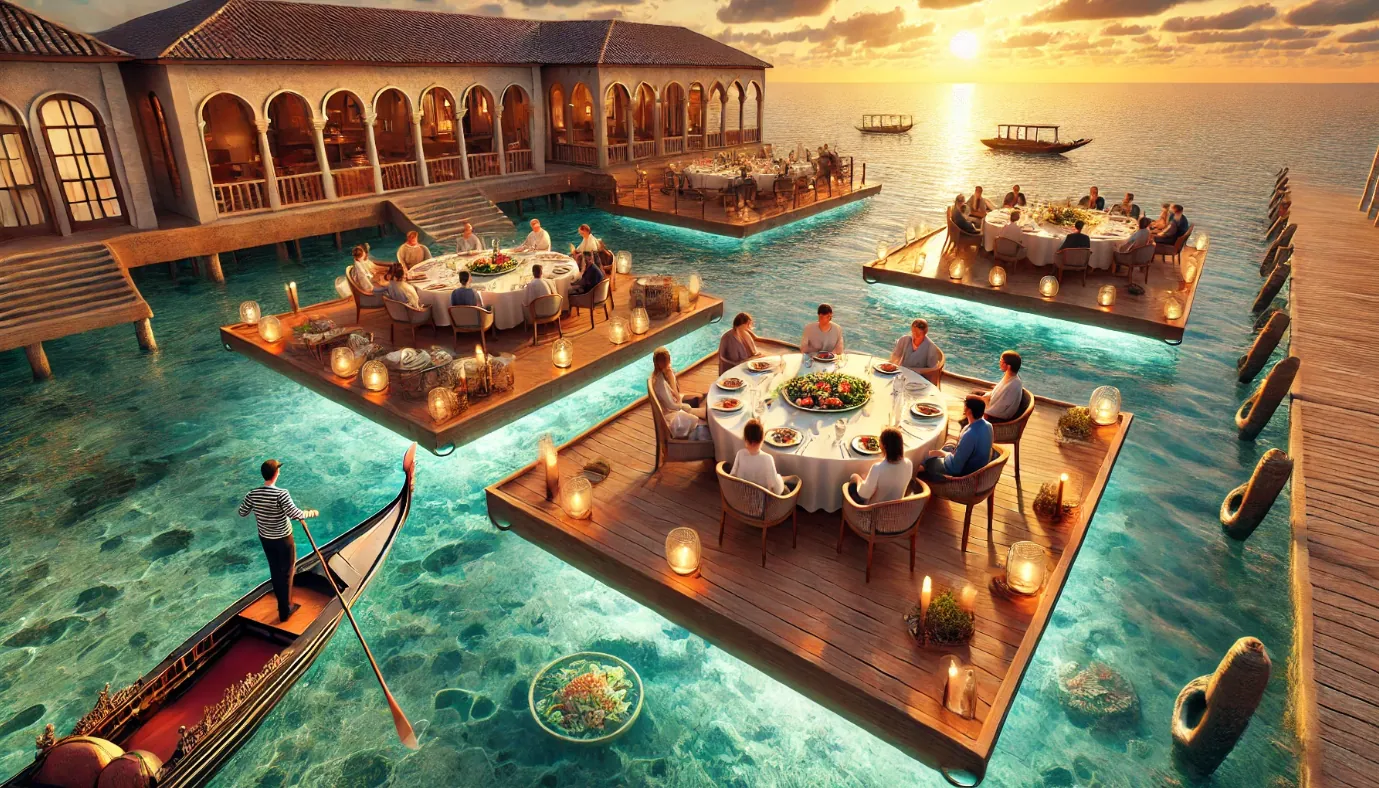
The food is as varied as the venues. Some serve multi-course menus from well-known chefs; others keep it casual, with fresh seafood or local dishes. Drinks range just as widely. The best venues tie the menu to where they are moored: a floating restaurant in the Maldives might build its menu around the catch from the Indian Ocean, while one in Venice might serve traditional Italian dishes with regional wines. That link to place is what makes the meal feel authentic.
Challenges and opportunities
Operating on water brings strict safety rules: life jackets, fire safety equipment and emergency procedures, along with planning for weather so guests stay safe and comfortable.
The return is flexibility. A floating venue can sit on a river, a lake or a stretch of coast, or further out to sea. It can be a permanent fixture or move between locations, which lets an operator reach different markets. And at a time when guests choose a restaurant for the experience as much as the food, the setting itself is a strong selling point.
What comes next
Advances in marine architecture, renewable energy and sustainable materials will make floating venues more efficient and lighter on the environment. Digital ideas, such as augmented reality or interactive dining, may add another layer. As guests look for meals they will remember, demand for dining on the water looks set to grow.
V-Marine designs and builds floating restaurants and lounges of this kind, including the Ventus Floating Lounge, delivered for Four Seasons Hotel Bahrain Bay in 2020.